
How Long Should a Massage Session Be? Why We Choose 90 Minutes

Updated: Sep 12
How long should a massage session be? For many people, 60 minutes can feel rushed when they want both focused work and full-body relaxation. That is why every massage at Dragonfly Aura is designed as a personalized 90-minute session.
Ninety minutes gives your therapist time to understand what your body needs, help you settle into the experience, address priority areas thoughtfully, and still create a complete, unhurried session. It is not about filling extra time. It is about using time with intention.

How long should a massage session be? The Short Answer: 90 Minutes Offers a More Complete Experience
A shorter appointment may be appropriate in some settings, especially when the goal is limited to one small area. For the kind of individualized massage Dragonfly Aura provides, however, 90 minutes offers a better balance of consultation, focused therapeutic work, and relaxation.
Massage is not most effective when every minute feels rushed. Your therapist needs enough time to listen, adjust the plan, work gradually, and respond to how your body feels during the session.
Why a 60-Minute Massage Can Feel Rushed
A standard 60-minute appointment often includes a brief consultation, time to get settled, transitions between positions, and the hands-on massage itself. When several areas need attention, the therapist must make difficult choices about where to spend the available time.
Goals such as easing neck and shoulder tension, addressing lower-back discomfort, supporting tired legs, and creating full-body relaxation can be difficult to address meaningfully within a compressed session.
A longer appointment does not mean every area receives intense work. It means the therapist has greater flexibility to prioritize your main concerns without making the rest of the massage feel incomplete.
What 90 Minutes Allows Your Therapist to Do
Begin With a Meaningful Conversation
Every session starts with communication about your goals, comfort, recent changes, areas to prioritize, and anything that should be avoided.
Help You Settle Into the Experience
Many clients arrive carrying the pace of the day. Breathing, muscle guarding, and mental activity often begin to soften gradually rather than immediately. An unhurried beginning gives you space to become comfortable before more focused work begins.
Address More Than One Priority Area
Ninety minutes allows your therapist to give attention to a primary concern while also supporting related areas and providing a cohesive full-body experience when appropriate.
Adjust the Session as Your Body Responds
An area may need a different pace, technique, position, or amount of attention than originally expected. More time gives your therapist room to adapt without sacrificing the rest of your session.
Finish Without Abruptly Rushing
The closing portion of a massage matters. A gradual, grounded finish can help the session feel complete rather than suddenly interrupted.
Is a 90-Minute Massage Better Than a 60-Minute Massage?
“Better” depends on the person, goal, setting, and type of massage. A 60-minute massage is not inherently inadequate, and a longer session is not automatically better.
Dragonfly Aura chose 90 minutes because it supports our style of personalized care. We do not want clients to choose between attention to a specific concern and the opportunity to relax more fully. Ninety minutes gives us enough flexibility to provide both when appropriate.
Quality still depends on good communication, suitable techniques, professional judgment, and respect for your comfort.
Who May Especially Appreciate a 90-Minute Session?
• Clients wanting a full-body massage with extra focus on specific areas
• People experiencing tension in several regions, such as the neck, shoulders, back, hips, or legs
• Active clients seeking a more complete recovery-oriented session
• Clients who need time to relax before their body begins to soften
• People receiving Swedish, deep tissue, sports, prenatal, lymphatic, or other personalized bodywork
• Anyone who dislikes feeling rushed during wellness appointments
Ninety minutes does not mean the massage must be firm, intense, or physically demanding. Pressure and techniques should always be adapted to the client. At Dragonfly Aura, “more pressure” is not treated as a measure of quality.
What Happens During a Dragonfly Aura 90-Minute Massage?
A session is personalized rather than performed as a fixed routine. The experience commonly includes:
• A brief conversation and session planning
• Comfortable positioning and professional draping
• A gradual beginning to help you settle
• Focused work based on your goals and preferences
• Attention to related areas when appropriate
• A complete, unhurried finish
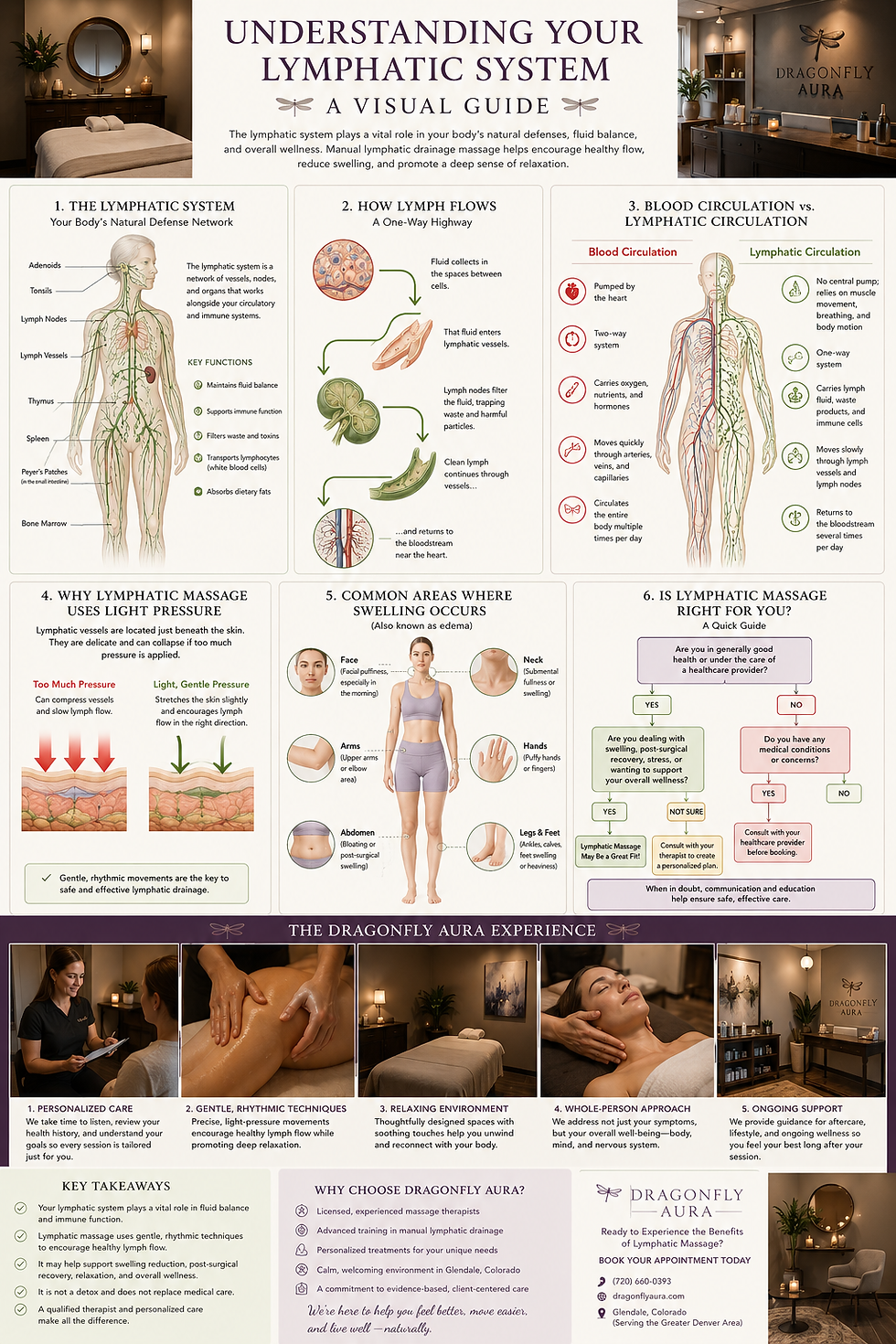
The exact balance changes with the service and the individual. A Swedish massage may emphasize relaxation and flowing techniques. Deep tissue or therapeutic massage may devote more time to persistent muscular tension. Sports massage can focus on the demands of an active body, while lymphatic massage uses intentionally gentle, specialized techniques.
Should Your First Massage Be 90 Minutes?
For many first-time clients, 90 minutes can be especially helpful because there is time to communicate, settle in, and learn how your body responds without feeling hurried.
You do not need to know exactly which technique you need before arriving. Choose the service that most closely matches your main goal, and your therapist will discuss your preferences and personalize the session within the selected service.
If a health condition, recent surgery, pregnancy, injury, medication, or medical concern may affect massage, consult a qualified healthcare professional when appropriate and share relevant information with your massage therapist before the session.
How Often Should You Schedule a 90-Minute Massage?
Frequency depends on your goals, schedule, budget, and response to massage. Some clients visit occasionally, while others choose an appointment every few weeks or once a month.
Consistency can be more useful than following an arbitrary schedule. Our membership is designed for clients who want to make personalized 90-minute massage a regular part of their wellness routine.
Preparing for Your 90-Minute Appointment
• Complete requested intake forms before your appointment
• Eat lightly rather than having a heavy meal immediately beforehand
• Arrive with your goals in mind while remaining open to your therapist’s recommendations
• Communicate about pressure, temperature, positioning, and comfort
• Allow yourself a few quiet minutes afterward when possible
Frequently Asked Questions
Is 90 Minutes Too Long for a Massage?
For most clients who are comfortable receiving massage, 90 minutes feels spacious rather than excessive. Tell your therapist at any time if you need a position change, pressure adjustment, or other comfort modification.
Does a Longer Massage Mean Deeper Pressure?
No. Duration and pressure are separate. Ninety minutes allows more thoughtful pacing; it does not require deeper pressure.
Can the Therapist Focus on Only One Area for 90 Minutes?
Your session can prioritize one concern, but your therapist may recommend addressing related areas to create a more balanced and comfortable experience.
Are All Dragonfly Aura Massage Services 90 Minutes?
Yes. All current massage services are structured as 90-minute experiences so clients can receive personalized, unhurried care.
Do I Need to Choose Every Technique Before Booking?
No. Book the service that best matches your main goal. Your session begins with a conversation, and appropriate techniques are adjusted within the service scope and your therapist’s training.
Give Your Body the Time It Deserves
At Dragonfly Aura, 90 minutes is not an upgrade or an afterthought. It is the foundation of how we provide massage therapy.
Our goal is to offer thoughtful, personalized care in Glendale, Colorado—serving Denver and surrounding communities—without making your appointment feel compressed.
This article provides general information and is not a substitute for individualized medical advice. Ask a qualified healthcare professional whether massage is appropriate for you if you have a medical condition or health concern.


Comments